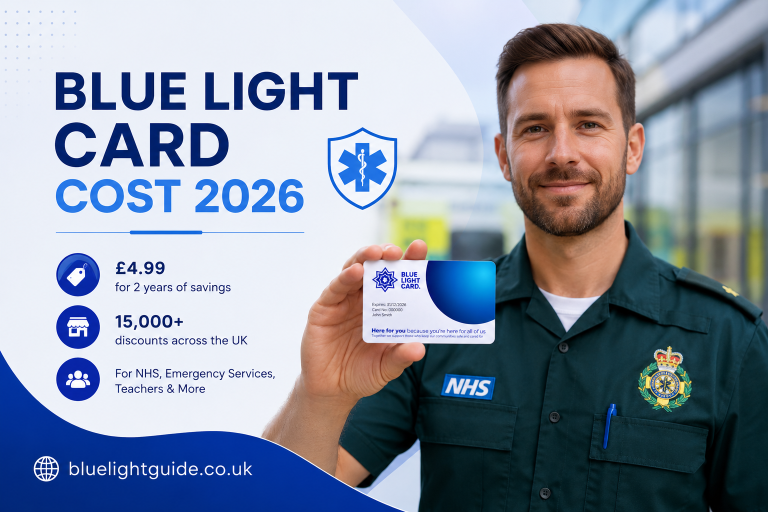
Knowing how to use your Blue Light Card is a different problem to knowing where it works. There are six separate ways a discount reaches you, and the reason people get caught out at the till is that they only know about one of them.
Showing the card is the exception rather than the rule. Most of what the card does now happens before you get to the shop, which is a real shift from how the scheme worked in its early years.
Check the offer type in the app before you leave the house. Half the complaints about the card being useless come from people who turned up at a shop that needed the discount bought or claimed in advance.
- Six redemption routes exist, and only one of them involves showing your card at a till.
- Shopping Cards have to be bought before you shop, not claimed afterwards.
- Some retailers ask for photo ID alongside the card, because card sharing breaches the terms.
How Blue Light Card Discounts Are Claimed
Work out which of these six applies to the shop you are going to, and the rest looks after itself.
| Retailer type | How the discount is claimed |
|---|---|
| High street chain with a till discount | Show physical or virtual card before paying |
| Online retailer with a code | Copy code in the app, paste at checkout |
| Online retailer with member pricing | Click through from the app, price drops automatically |
| Fast food and restaurant chains | Link your card inside the brand’s own app, scan a QR |
| Supermarkets and big retail | Buy a discounted Shopping Card first |
| Tech and electronics | Register on a dedicated employee purchase store |
Showing Your Card in Store
The simplest route and the rarest one, which is the opposite of what most people expect.
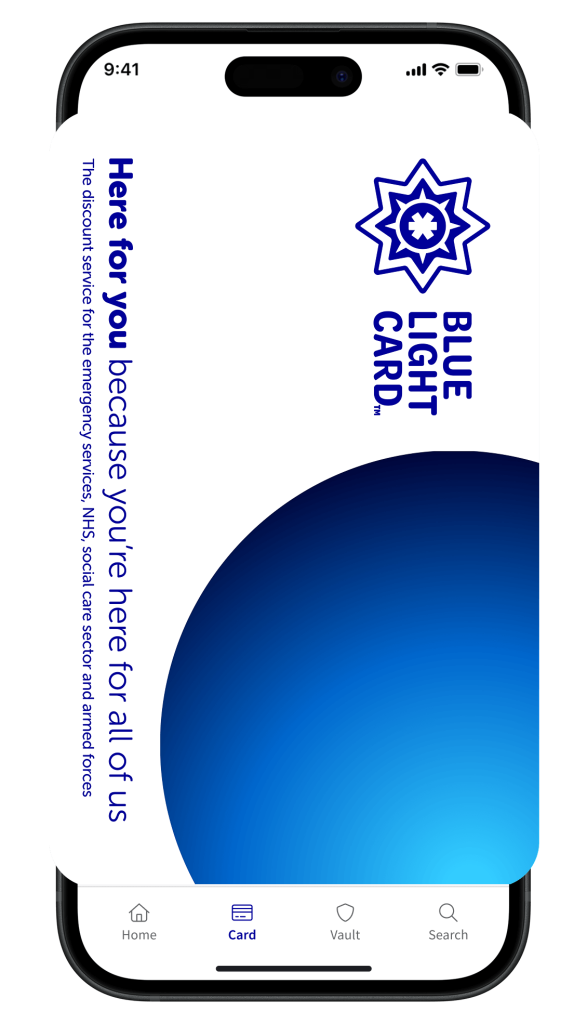
You hand over the physical card, or open the virtual card in the app, before the transaction goes through. Once it has been rung up, most tills cannot apply it retrospectively without a supervisor void.
The app carries a virtual card and surfaces it automatically on offers you are likely to use in person, so you do not need the plastic one in your wallet.
Expect to be asked for photo ID occasionally. Card sharing breaches the terms and some chains instruct staff to check the name matches, which is entirely reasonable and still catches people off guard.
Copying a Code for an Online Checkout
The workhorse of the whole scheme, and the one worth learning properly.
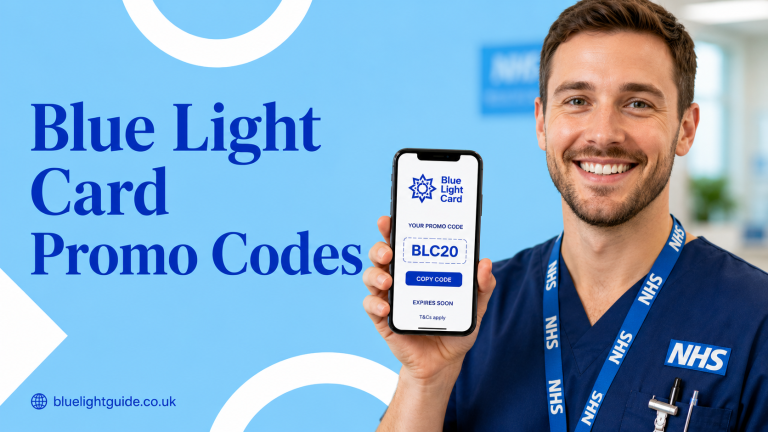
Find the brand in the app, tap the button to reveal the discount, and the code copies itself to your clipboard. Tapping again opens the retailer’s site inside the app’s own browser.
- Stay in that browser. Jumping out to Safari or Chrome mid-purchase is the most common reason a discount silently fails to register, and you will not get a warning.
Some codes are single-use and tied to your account, so they cannot be shared or reused. If a code has already been redeemed once, it will fail silently at checkout rather than telling you why.
Codes also expire, sometimes within days. The ones that sit in your wallet in the app usually carry a visible expiry, and the general rules on what codes can and cannot be combined with are worth reading before a big order.
Automatic Member Pricing
No code appears anywhere, and that is not a fault.
Some partners apply special pricing on their own site once you arrive through the Blue Light Card link. The tracking happens invisibly, so the prices you see are already the member prices.
People assume something has broken and go hunting for a discount box that does not exist. Compare one product against an incognito window if you want to satisfy yourself it worked.
Ad blockers and strict tracking-prevention settings can break this route, because the same mechanism that carries the discount is the one your browser is trying to stop.
Linking Your Card Inside a Brand’s App
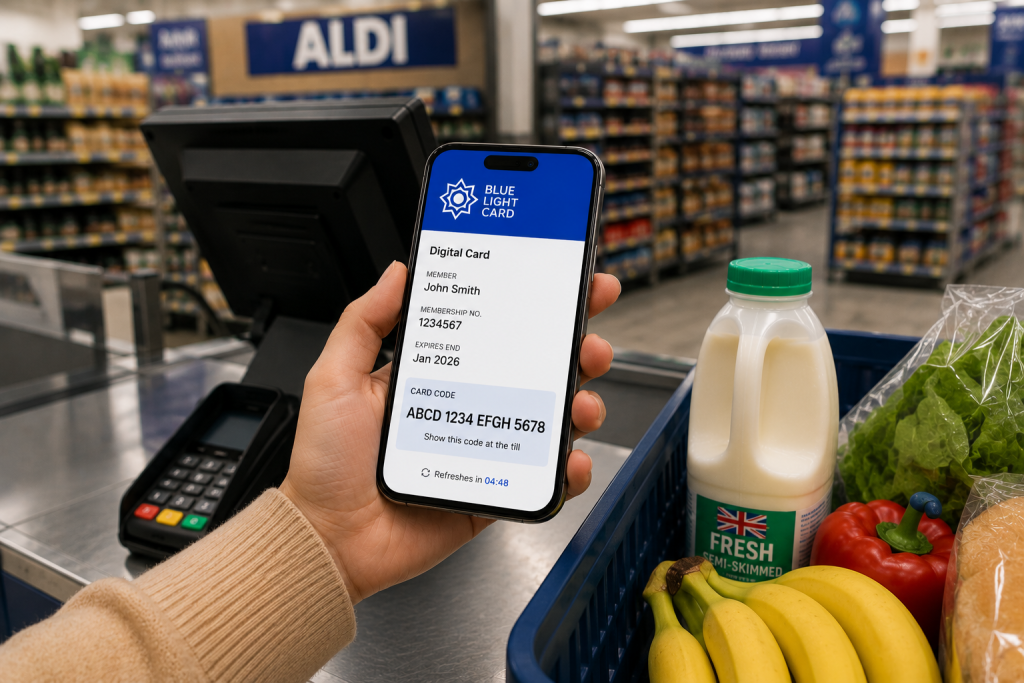
Standard across fast food, and the reason waving your Blue Light Card at a counter gets you nowhere in most of them.
You enter your Blue Light Card number and surname once inside the retailer’s own app. It then generates a QR code you scan at the counter, or applies member pricing to app orders automatically.
Note: a discount linked to a brand’s app almost never survives a third-party delivery order. Ordering the same food through a delivery platform drops the discount entirely, even though the restaurant is the same.
Do the linking at home rather than in a queue. It needs an account, a verification step and occasionally a password reset, none of which you want to be doing at a counter.
The takeaway chains are where this bites hardest, and the individual mechanics differ between them, as the Domino’s, Pizza Hut and KFC breakdown sets out.
Buying a Discounted Shopping Card
This is the one that catches everyone, because the saving happens before you shop rather than at the point of paying.
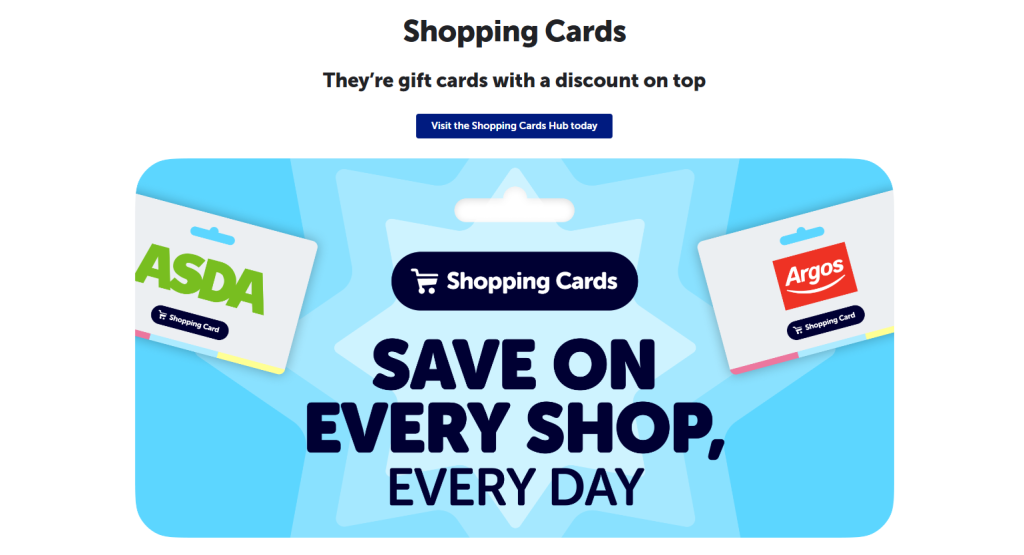
You buy a gift card below face value in the app, it lands in your account digitally, and you spend it like any other gift card. The discount is baked into what you paid, so nothing comes off at the till.
Buy in the size of your actual shop. You are pre-loading real money, and a balance you never spend is a loss rather than a saving.
Shopping Cards are generally non-refundable once bought. That is a genuine difference from a card payment, and it is the single biggest reason to load smaller amounts more often.
There is a consumer protection point underneath this too. The vouchers are supplied through Reward Gateway, Blue Light Card’s trading partner, and money routed through a third-party voucher provider may not carry the protection a direct card purchase would if a retailer collapsed.
The upside is that this mechanic usually stacks with loyalty schemes, since you are simply paying with a gift card. Most of the grocery savings on the card now work exactly this way.
Employee Purchase and Registration Schemes
The most awkward route, and often the most valuable one.
Several tech brands run separate purchase portals rather than issuing codes. You register with an email address, get verified against your membership, and then buy through a store only members can see.
Verification is not always instant, and the confirmation email has a habit of landing in spam. Start the process a few days before you actually want to buy something.
These stores usually have their own rules on quantity, model availability and delivery, and they rarely run the same promotions as the public site.
What Actually Happens at the Till
The gap between how this reads on paper and how it goes in a shop is worth being honest about.
Staff in partner chains generally know the card and it takes seconds. Staff in a shop where the only offer is a Shopping Card will look at you blankly, because from their side no offer exists.
That blank look is not the shop being difficult. It means you have turned up to a shop expecting mechanic one when it runs mechanic five, and there is nothing anyone behind the counter can do about it.
Ask before the items are scanned, not after. Reversing a completed transaction takes a supervisor and a queue behind you, and plenty of tills simply will not do it.
Franchised branches are a genuine grey area. A chain can be a national partner while an individual franchise opts out, which is why one branch honours something the next one refuses.
Worth asking anyway in independents and smaller chains. Some local businesses give a discount without listing it anywhere, and the worst outcome is a polite no.
When a Discount Does Not Work
Most failures come down to four things, and they are quick to rule out in order.
- The code expired or was single use and has already been redeemed.
- You left the app’s browser partway through and the click-through stopped tracking.
- Your basket contains excluded items such as sale stock, alcohol, gift cards or tobacco.
- Another promotion is already applied, and only one discount is allowed per transaction.
The exclusions catch people more than anything else. A basket that is mostly discountable can still fail if one restricted item is sitting in it.
Split the transaction if that happens. Pay for the excluded items separately and run the discount on the rest, which works at almost every till and online checkout.
If none of those explain it, check whether the partnership still exists at all. Brands leave the scheme quietly, and the current roster of live partners is the fastest way to rule that out before you contact support.
Getting More Out of Each Route
Install the browser extension if you shop on a laptop. It flags a discount on the site you are already browsing, which solves the real problem of forgetting to check at all.
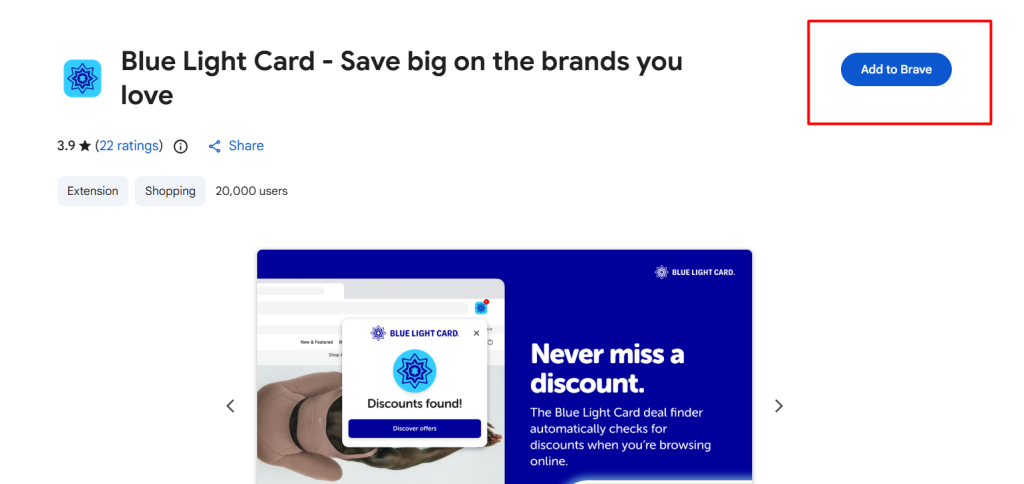
It only runs on Chrome on a desktop, so it does nothing on a phone, in Safari or in Firefox. That limitation is not obvious until you wonder why it never fires.
I use brave, thats why it says “Add to Brave”.
Brave is based on Chromium, so any Chrome extension can work here too.
Check the offer type before every trip rather than assuming a shop works the way it did last year. Brands move between these six routes, and a chain that had a till discount in 2024 may be Shopping Card only now.
If you are planning where to shop rather than how to pay, the category map of participating retailers is the better starting point, and rates across every route move often enough to be worth a look before you commit.