Paid carers can get a Blue Light Card, but unpaid family carers can’t. Carer’s Allowance doesn’t change that, because Blue Light Card checks your role, not your benefits.
Blue Light Guide is an independent guide and isn’t affiliated with Blue Light Card Ltd. For your account, verification or payments, use the official Blue Light Card website or app.
Care home staff, staff at regulated care providers, council social care teams and foster carers all qualify. Membership costs £4.99 for two years.
If you look after a relative without pay, free schemes built for carers fill the gap. The benefits you may be owed are worth far more than any discount card.
From Care Homes to Councils
Blue Light Card’s social care page markets the card to carers. Every category behind that word is tied to a care organisation, a council or fostering, though, not to looking after family at home.
| Carer | Eligible | Where to apply |
|---|---|---|
| Care home staff and volunteers | Yes, any role | Care Home |
| Staff at a regulated care provider | Yes | Care Company Workforce |
| Council social care and Shared Lives | Yes | Social Care Council |
| Social workers | Yes | Social Worker |
| Foster and kinship foster carers | Yes | Foster Carers |
| Kinship carers and special guardians | Not for now | Not listed yet |
| Unpaid family carers | No | Discounts for Carers |
| Carer’s Allowance on its own | No | Discounts for Carers |
Every Job in a Care Home
Anyone who works in a care home qualifies, in any role. Blue Light Card’s care home rules cover people who deliver care and people who keep the place running behind the scenes.
Care home volunteers can join as well. Residential care companies follow the same rule, so every employee qualifies whatever their job, and so do their volunteers.
CQC Agencies and Councils
Outside care homes, the test is your employer’s registration. You qualify if you work for an organisation on the register of the Care Quality Commission or its equivalent in Northern Ireland, Wales, Scotland or Jersey.
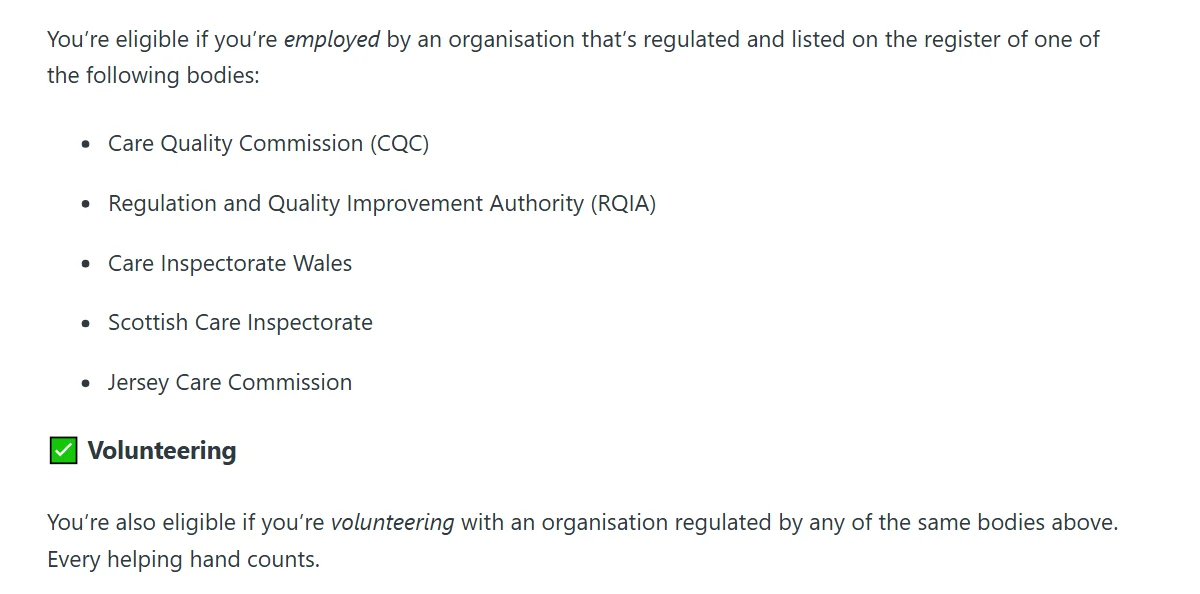
So a home care agency on the CQC register counts, and so does volunteering with one. Pick the Care Company Workforce category when you apply.
Council staff have a separate route. Social care teams, public health staff, Shared Lives carers and Children’s Trusts staff apply under Social Care Council, although volunteers there aren’t eligible. Social workers have a category of their own.
Fostering Counts as Care Work
Foster carers and kinship foster carers are both eligible under Blue Light Card’s foster carer rules. Kinship carers and special guardians are marked as not eligible “for now”.
Retired foster carers can still join with a pension document and proof of at least four years’ fostering.
A Payslip or ID Badge Will Do
Signing up takes three steps on Blue Light Card’s website. You pick your service, enter your details and pay £4.99 for two years. Our guide to what the Blue Light Card is covers what that buys.
Choose the service that matches your employer, such as Care Home, Residential Care or Care Company Workforce. Then upload a document that proves your current job, like a payslip, an ID badge or a letter from your employer. Blue Light Card’s verification guide asks for one that shows your full name, your place of work and any relevant dates.
Blue Light Card aims to review a work ID within 72 working hours, Monday to Friday, and it’s often sooner. An email confirms the decision, and offers open the day after your application is complete. Our application walkthrough goes through each screen.
Personal assistants employed through Independent Living Group have their own category, proved with an ILG ID badge. If you’re a personal assistant employed another way, ask Blue Light Card support which category fits before you pay.
Retired care staff qualify too. You’ll need a pension document plus proof of at least four years in the job, such as two P60s four years apart or a leaver letter with your start and end dates. Our guide for retired workers has the rest.
Carer’s Allowance Isn’t Enough
Carer’s Allowance won’t get you a Blue Light Card on its own. Each category asks for proof of a job or a volunteering role, and a benefit award letter isn’t either.
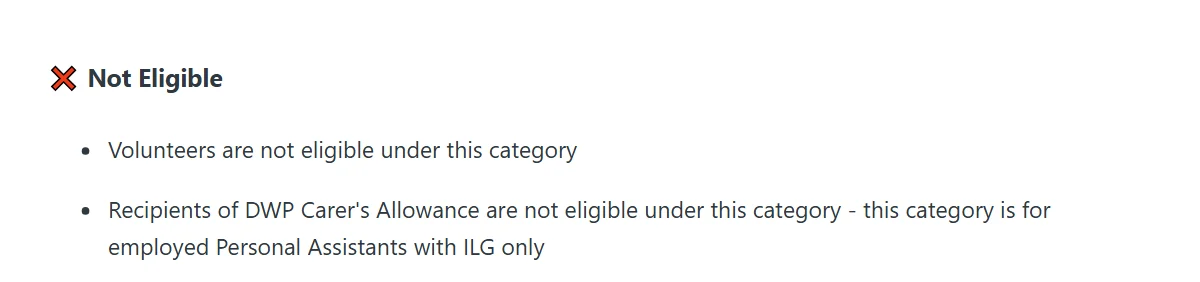
Blue Light Card’s help centre names the benefit in its ILG Personal Carer category. It says people who get Carer’s Allowance aren’t eligible under that category, which is only for personal assistants employed through ILG.
The mix-up is easy to make. The social care page says the card is available to carers and lists carers among its eligible roles, yet every route behind that is paid care work, volunteering at a care provider or fostering.
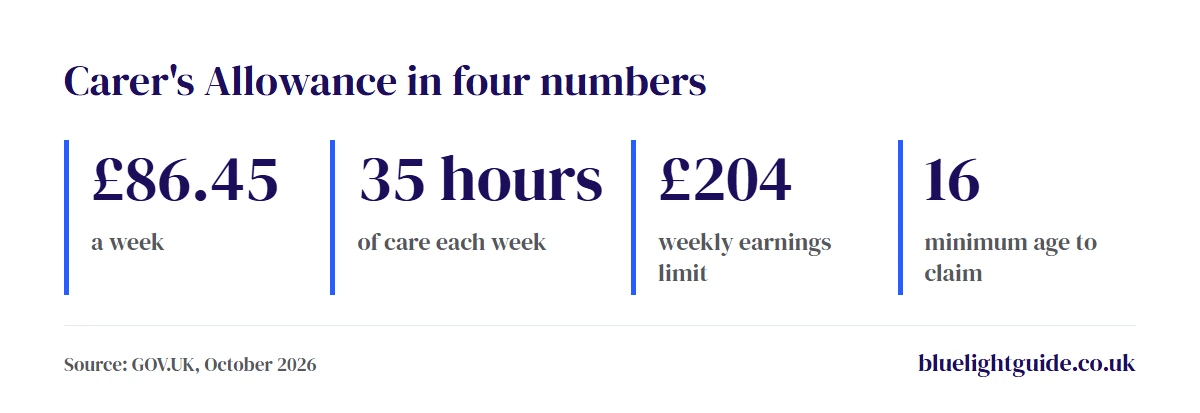
There’s one way in for some carers. Carer’s Allowance lets you earn up to £204 a week after tax, National Insurance and expenses, so some carers also work part time in care. If that job is at a care home or a registered care provider, the job qualifies you.
Applying online doesn’t change the answer, and neither does the app. Our full eligibility list shows every category Blue Light Card accepts.
Free Help for Unpaid Carers
Family carers have schemes of their own, and most of them cost nothing. These are the ones worth joining first.
Discounts for Carers Is Free
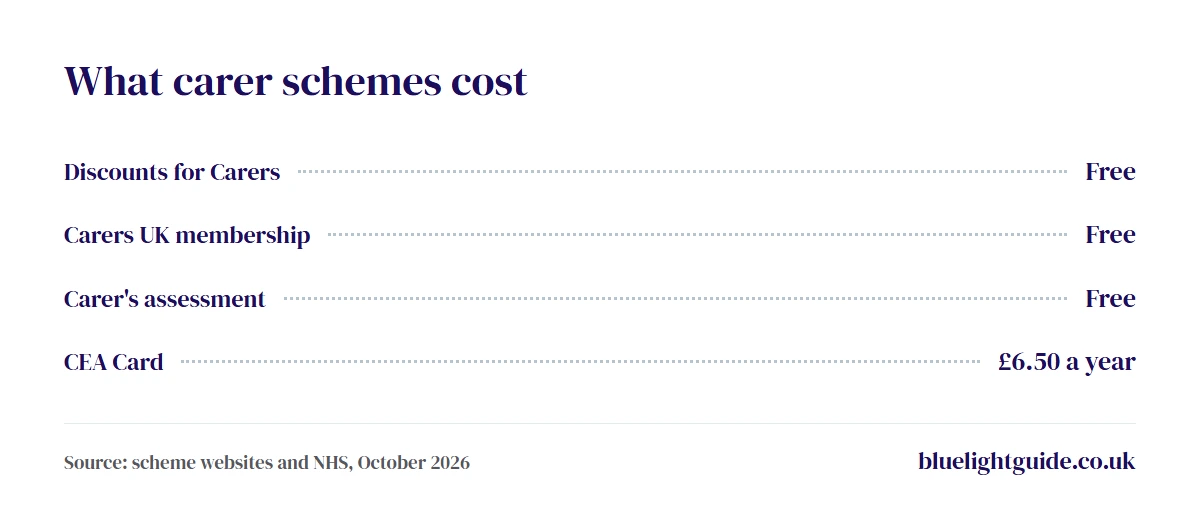
Discounts for Carers is the closest thing to a Blue Light Card for family carers. It’s free to join, and its eligibility answer names unpaid carers alongside paid ones.
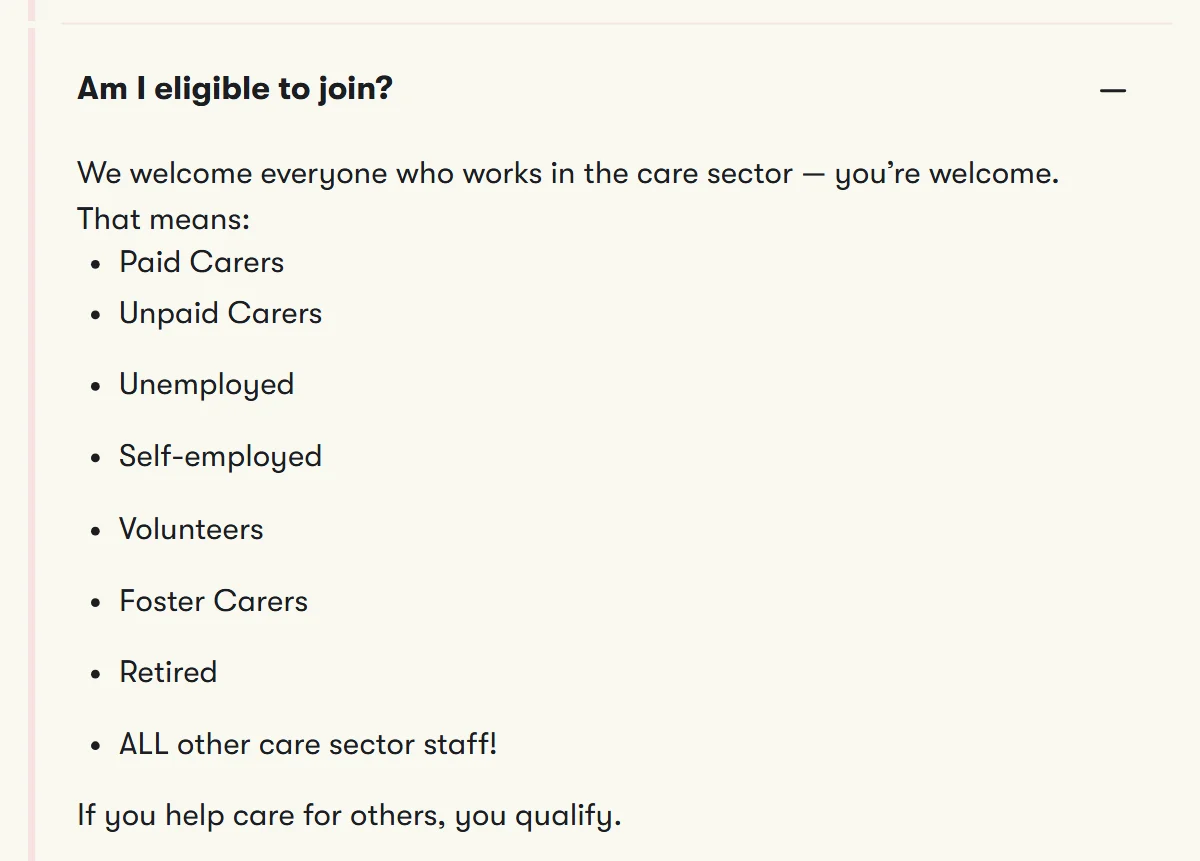
It’s a sister scheme of Health Service Discounts and works with more than 2,000 brands. You use codes online and show a digital ID in shops.
Carers UK membership is free as well. Members get carer news, an online community and exclusive member discounts and giveaways.
Some councils run carer ID cards with local discounts. Carmarthenshire’s Carers ID Card, for example, is for unpaid carers and works at businesses that display its sticker. Ask your council or local carers centre what runs near you.
£86.45 a Week Comes First
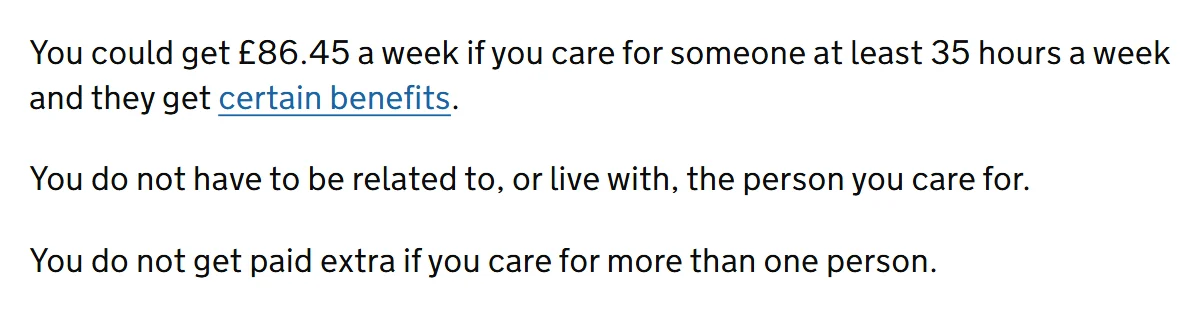
For most family carers, benefits matter far more than discounts. Carer’s Allowance pays £86.45 a week if you care for someone for at least 35 hours a week and they get certain benefits, such as Personal Independence Payment or Attendance Allowance.
You need to be 16 or over and not in full-time education. In Scotland you claim Carer Support Payment instead.
Caring for at least 20 hours a week can get you Carer’s Credit, which fills gaps in your National Insurance record. Carer’s Allowance already comes with those credits.
A live-in carer for someone who isn’t their partner, spouse or child under 18 isn’t counted for Council Tax, which can cut the bill by 25%. A carer’s assessment from your council is free too, and can lead to breaks and practical help.
Cinema Trips With a CEA Card
If the person you care for enjoys films, look at the CEA Card. It costs £6.50 a year and lets the cardholder bring someone free when they buy a full price ticket, at about 90% of cinemas.
The card belongs to the person you care for, not to you. They usually need a benefit such as PIP, Disability Living Allowance or Attendance Allowance, or a sight impairment registration.
Foster families and young carers can ask about a Max Card too. Councils and selected charities give them out, and they bring free or discounted entry at attractions around the UK.